





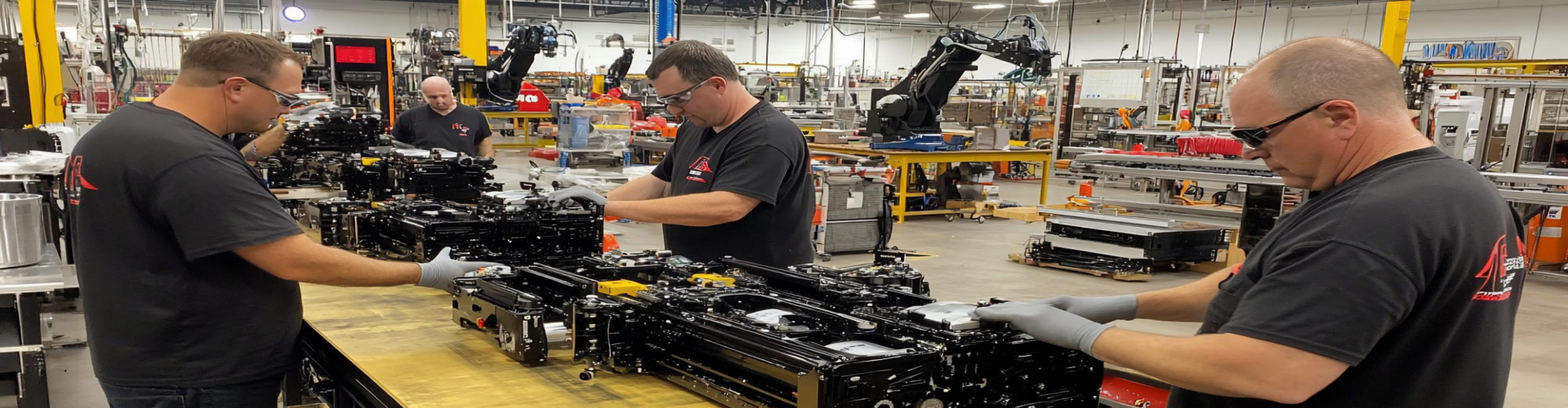
Slovakia is one of the most significant locations in Europe for car manufacturing. Various vehicle manufacturing locations, component production establishments, and companies working in logistics, engineering, and other areas contribute to the wide industrial network operating in Slovakia.
However, local employers encounter more and more difficulties in finding enough employees to fill technical jobs and production positions. Currently, shortages are noticeable in professions, including welders, CNC operators, industrial electricians, maintenance technicians, assembly employees, operators, and quality inspectors.
Labour authorities in Slovakia provide regional lists of in-demand occupations that can also be used for speeding up the hiring process of eligible overseas employees. It is important to note that occupations and regions change every quarter; therefore, employers should check the latest list before starting recruitment.
International recruitment allows employers to enlarge their recruitment options; however, it should be planned. Without proper preparations, such as conducting practical testing and permitting processes and providing support in onboarding procedures, recruitment might lead to problems and delays in hiring and working problems for organisations.
In the following blog, the benefits of hiring overseas employees in car manufacturing companies in Slovakia and how to do that will be examined.
Why Slovakia’s Automotive Industry Needs International Workers
The success of Slovakia's automotive industry is based on cooperation between large manufacturers and many organisations supporting them, such as electric equipment producers, metal processing companies, logistics companies, maintenance companies, and suppliers of services in manufacturing.
Demand for employees changes due to the following reasons:
- A new production line launch or a new company.
- The receipt of a big order by a supplier.
- An increase in production shift time.
- Employees retirement.
- The opening of a new plant by a company.
- Seasonal demand for production.
- Machine breakdowns during maintenance.
Under such circumstances, hiring locally is sufficient only for a small number of employees; however, in situations where many employees are needed, the hiring process becomes harder.
Findings in the automotive industry show that vehicle production in Slovakia is quite influential regarding its industrial performance. Thus, in case of any changes in the automotive industry, manufacturing turnover in the country can suffer.
Therefore, it is evident that talent availability is an operational issue and not only an HR issue. Unemployment in the automotive industry can lead to:
- Losing production capacity.
- Delay in delivery.
- Machine usage problems.
- Shift scheduling problems.
- Quality assurance problems.
- Huge overtime costs.
International staffing provides an opportunity for building a talent supply chain instead of relying only on the local market.
Automotive Roles That Can Be Recruited Internationally
Every automotive manufacturer and supplier will have unique workforce needs. For example, a vehicle manufacturing plant might need many dozens of production workers, whereas a manufacturer of auto parts might look for CNC operators, welders, technicians, inspectors, etc.
Common automotive roles include:
Production and Assembly Roles
Workers in these professions assist with day-to-day production and assembly processes.
Some of the typical positions are:
- Automotive assembly employees
- Production operators
- Machinists
- Press machine operators
- Packers
- Material handlers
- Warehouse workers
- Forklift Drivers
The candidates for these positions should undergo an assessment regarding their basic technical knowledge, physical readiness, experience working a shift-based job, and follow the standard operating procedures.
Skilled Technical Roles
Jobs in the technical sector require a more thorough assessment of the practical skills of candidates.
Employers may look for:
- MIG, MAG, and TIG welders
- CNC machine operators
- CNC setters
- Tool and die mechanics
- Industrial electricians
- Mechanics in machines maintenance
- Mechatronics experts
- Industrial mechanics
Earlier in this article, it was mentioned that during candidate screening, just examining a CV might not be enough. The same applies to technical workers, as a candidate may highlight a few years of experience with the scope of the job that does not represent any similarity to the machines, materials, tolerances, or standards used at the factories of potential employers.
Quality and Supervisory Positions
Due to various needs of employers, it is possible to recruit internationally even for those positions which include:
- Quality inspectors
- Line leaders
- Production supervisors
- Maintenance supervisors
- Welding inspectors
- Measurement technicians
Advanced technical and managerial positions might not need an intermediary going through the Blue Card process to get hired in Slovakia since the Blue Card is given to qualified workers who have been given a confirmation of their qualifications, have a high enough salary, and have a contract with an employer for at least six months.
Where Can Slovakia Recruit Automotive Workers?
When it comes to hiring, automotive employers have two possibilities: EU candidates and non-EU candidates, though both options come with different regulations.
Slovakia offers a great level of labour mobility to EU citizens (including EEA and Switzerland citizens); however, due to the competition for the skilled workforce in Europe, employers may still be facing a labour shortage issue. As stated in the report of the European Labour Authority, Europe has been experiencing labour shortages leading to high competition for the labour force in various spheres in 2025.
Because of this, many companies look towards the non-EU candidate market.
Countries of the Indian Subcontinent have the potential to provide a lot of candidates with experience in automotive manufacturing, engineering, metal processing, industrial maintenance, machine operation and assistance in manufacturing.
Yet the choice of the country to recruit from should not be based only on the number of candidates. A good partner in recruiting should take into consideration:
- relevant experience in the industry
- practical skills
- language competence
- qualifications
- availability of documents
- visa prospects
- time for recruitment
- cultural preparedness
- retention potential
A proper recruitment partner should compare these factors before recommending a sourcing location.
Step-by-Step Process for Hiring Automotive Workers in Slovakia
The process of recruiting international employees can be so much easier if it is planned.
Step One: Create a Precise Plan for Workforce
A business owner needs to make sure that all of the requirements regarding employees have been precisely stated:
- Job title
- Number of workers needed
- Location of work
- Experience required
- Technical qualifications
- Knowledge of machines and equipment
- Shifts if necessary
- Salary and benefits offered
- Accommodation possibilities.
It is critical to avoid vague formulations such as “factory worker” or “technician” since these phrases make it much more difficult to find candidates.
A CNC operator who works in a facility manufacturing automotive components in large quantities will definitely need to know a particular kind of machine as well as measurements, drawings, tolerances, and quality standards.
The recruitment conditions must correspond to reality.
Step Two: Choose a Suitable Sourcing Market
The recruiter needs to know which countries have people who meet the criteria.
It goes without saying that the decision must be based on facts. Some of the factors to be analysed are:
- Candidates availability
- Previous experience in the automotive industry
- Educational background
- Expectations concerning salary
- Chances of obtaining the necessary permits
- Recruitment history
- Availability of documents.
In order to get results quickly, sourcing can be done in several cities or regions at once.
Step Three: Analyse Resumes and Experiences
The first screening should be aimed at confirming that every job candidate meets at least the minimum requirements.
The following must be checked during the process:
- Experience
- Validity
- Education
- Duties performed
- Knowledge of machines
- Previous work experience at automotive companies
- Languages spoken
- Willingness to relocate.
All documents presented by candidates must be thoroughly verified. In some cases, it may be reasonable to call previous employers.
Step Four: Test Candidates’ Practical Skills
The practical testing is the most crucial stage of recruitment.
For example, welders must show their skills in vocational welding, and CNC lathe operators must demonstrate their abilities to operate machinery and use measuring equipment.
The testing can involve:
- Tool usage
- Machinery operation
- Technical specification reading
- Measurements
- Welding.
Step Five: Conduct Interviews
Once the candidates pass the technical test, they have to go through an interview.
During the interview, the recruiters try to understand the following:
- Understanding of the profession
- Experience in the automotive industry
- Ability to work in shifts
- Communication skills
- Salary expectations.
Step Six: Prepare All Necessary Docs
Finally, once the selection is completed, employers have to deal with paperwork.
All of these may include:
- Contract
- Job offer
- Job description
- Salary and benefits
- Accommodation.
The conditions offered to candidates must be consistent with what they need in Slovakia
Work Permit and Residence Routes in Slovakia
Various factors determine the method of the procedure appropriate for the applicant, such as their nationality, profession, education, and nature of employment.
One of the most common methods for non-EU employees is a single permit, which combines a temporary residence permit for work with confirmation that the position is available.
Usually, a company has to inform the Labour Office about the vacant position before applying for confirmation of its availability to a foreign worker. This means that this notification must take place at least 20 days before the application, although there are exceptions and some expedited processes.
In cases where applications are filed according to the existing rules, the positive confirmation can be obtained by the time the employee submits an application for temporary residence.
Other options may include:
- Separate work permits in cases where applicable
- National visa procedures
- Seasonal employment options
- EU Blue Card for highly-qualified jobs
- Exemptions on grounds of residence
Applications and supporting documents must be filed in Slovak. In addition, foreign documents will need to be translated and certified.
Before submission, it is necessary to verify the information on the current procedures and electronic forms with the relevant authorities.
Employer Compliance Responsibilities
The hiring process does not end when the permit is received. The employer still has to comply with Slovak labour legislation and proceed with the necessary registration and notification process.
The employer carries out the following:
- Arrange an employment contract
- Pay a salary to the employee
- Follow the rules concerning working hours and rest
- Keep the workplace safe
Notify authorities about the employment of the employee; enable effective compliance with the obligations under the employment; report changes in the employment status of the employee or the termination of the employment.
The employer has to keep in mind the validity of the permission granted; otherwise, problems will occur in case of late renewal or incorrect reporting.
Why Employers Should Not Manage Everything In-House
Certain automotive firms attempt to run their overseas recruitment, screening, documentation, and movement through their in-house HR unit.
This could work well for a few select employment positions. However, the complication arises during mass hiring.
At that point, the internal HR team may have to handle:
- Advertising
- Candidate enrolment
- CV scanning
- Trade tests
- Interviews with candidates
- Medical examinations
- Collection of documents
- Translation of documents
- Permit files
- Embassy submission
- Travel arrangements
- Worker communication
- Arrival logistics
However, a professional international recruitment agency can take care of all these issues in one process.
This method helps ease the paperwork for the employer and lets the HR managers do something more important, like hiring.
How Dynamic Staffing Services Supports Automotive Employers
Dynamic Staffing Services helps employers find skilled and semi-skilled international workers in the production and automotive industries.
The recruiting procedures take place in the following manner:
- Identifying what workforce is needed
- Developing screening criteria
- Finding suitable markets for recruitment
- Advertising and moving candidates
- CV scanning
- Trade tests
- Employer interviews
- Medical examination
- Work permit and visa issues
- Travel arrangements
- Training of people moving to another country
Dynamic Staffing Services is capable of organising the recruitment of people for a concrete position or filling several positions in one plant.
Onboarding Automotive Workers After Arrival
Successful recruitment does not only mean how many workers arrive in Slovakia. It means how long it takes for those recruited workers to become productive employees.
A structured onboarding process should include:
- Rules of conduct
- Production norms
- Work schedules
- Safety rules
- Accommodation conditions
- Transportation
- Local registration
- Supervisor communication
- Quality expectations
- Technical workers may also need specific machine training.
Language support greatly improves workplace safety by reducing errors. Even if they do not need a detailed command of Slovak, employees should learn the most essential terms and vocabulary associated with safety.
Employers should carefully analyse work results in the first 30, 60, and 90 days. Prompt support will help prevent early difficulties from turning into serious problems.
Conclusion
Slovakia’s automotive sector needs a steady supply of production and technical workers. When local hiring cannot meet demand, international recruitment can help employers maintain shifts, support expansion, and protect delivery schedules.
However, overseas hiring must be treated as a complete workforce project. Employers need accurate job descriptions, suitable sourcing countries, practical trade tests, compliant permit processing, and structured onboarding.
Talk to our team about workforce planning and international recruitment. Contact Dynamic Staffing Services at clientservices@dss-hr.com.
