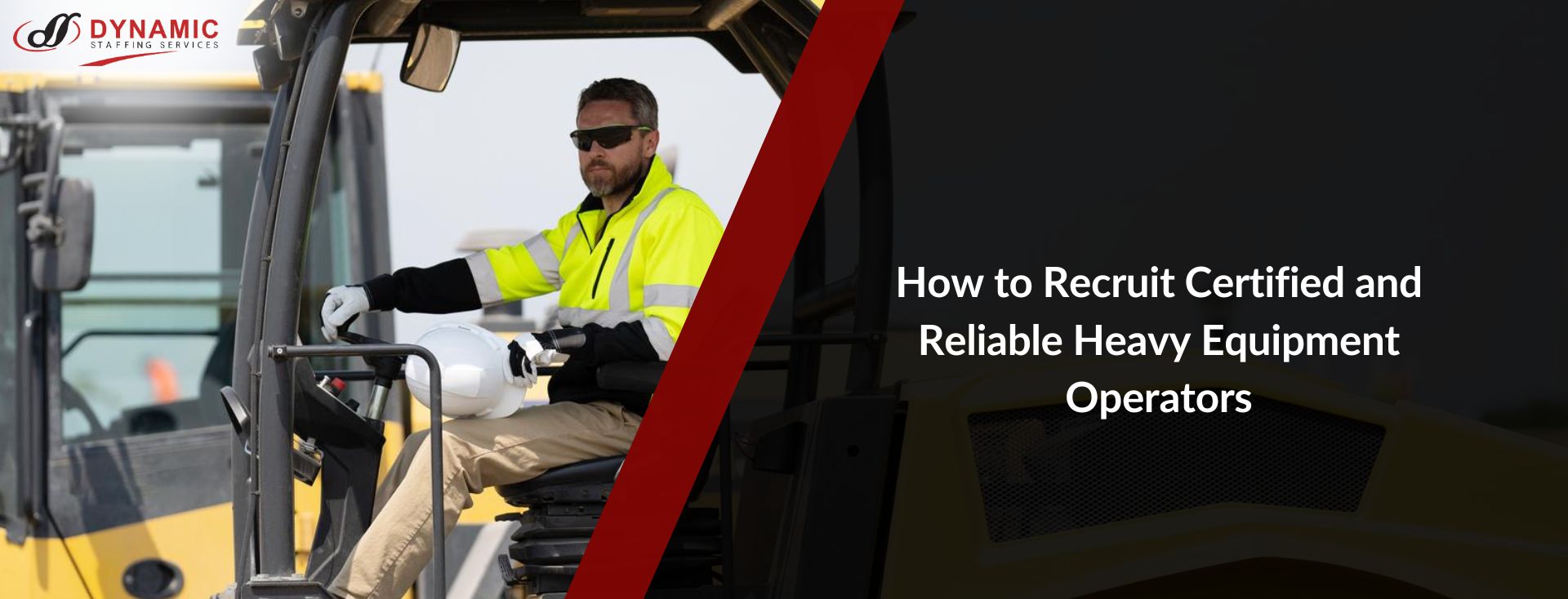
The number of quality heavy equipment operators continues to grow and expand with the ever-increasing growth of the construction, mining, logistics, and infrastructure sectors. Heavy machinery operators are key to keeping a job productive, as well as providing a safe work environment and ensuring that project deadlines are adhered to.
There are many risks associated with hiring unqualified heavy equipment operators for your business, which can result in problems such as extending project delivery times, increasing liability risks, damaging expensive equipment, and creating an unsafe work environment.
For this reason, it is critical to focus on hiring certified heavy equipment operators who are highly skilled in the operation of the equipment they will be operating on the job site, and who are reliable and safety-driven.
We will provide you with a complete step-by-step guide to help you recruit highly skilled heavy equipment operators, starting with the variety of certifications, evaluating and screening candidates, interviewing techniques, and how to utilize a staffing agency like Dynamic Staffing Services to help simplify the recruitment process.
Why Hiring Certified Heavy Equipment Operators Matters
Heavy Machinery operation is dangerous, requiring specialized training to ensure the safety of operators. Heavy Equipment Operators are responsible for: Many different types of machines, such as Excavators, Bulldozers, Cranes, Forklifts, Loaders, Gradys, and Backhoes, can be categorized into three different classes based upon their operating techniques. To operate heavy machinery safely, a typical operator needs much more than a driving background.
Employers should ensure that Heavy Machinery Operators possess a valid Heavy Equipment Operators Certification, as well as on-the-job training, and must be safety-oriented. By hiring certified operators, employers will have assurance that they have met the extensive training requirements set forth by the industry.
Certified Operators acquires an extensive knowledge of how to properly operate heavy machinery, including the equipment mechanics, load capacity, working in various types of terrain, site hazards, and emergency procedures.
By employing trained, licensed operators to operate heavy equipment, employers will have fewer incidents of injury to employees and damage to their heavy machinery. It is therefore in the best interest of both the employer and employee to be certified as a heavy equipment operator, to maximize productivity and reduce an employer’s liability and insurance costs.
Understanding Operator Certifications and Licensing
Before beginning the recruitment process, employers should understand the types of credentials heavy equipment operators typically hold.
Equipment Licensing
An individual must obtain licensing or certification in order to legally operate certain types of equipment, either locally or nationally. Depending on the device being used as well as the region in which the individual is located, there will be several standards that need to be complied with prior to receiving a license. Generally, these include:
- Age verification and an identity check
- Safety and operating examinations written and on paper
- Hands-on performance test of the ability to safely and effectively operate the specific pieces of equipment
- Health or vision screenings
In addition to general operating standards that all licensed operators must follow, some equipment types, such as mobile cranes, select styles of powered industrial lift trucks (PILTs), and particular kinds of towable lifts often require more advanced licensing or endorsements.
Safety Certifications
Every operator’s professional development must start with the establishment of a solid safety base. When an operator has been certified through training to operate equipment safely, it assures that the operator has received training on how to:
- Prevent hazards on the job site
- Follow safety procedures while operating equipment
- Know how to implement lockout/tagout procedures properly
- Comply with regulations from the OSHA
- Understand environmental safety rules
When a company employs an operator who has received a National Certification, the operator has had the necessary training to create an environment where safety is valued and taken seriously.
Step-by-Step Guide to Recruiting Qualified Equipment Operators
A systematic recruitment strategy reduces hiring risks and improves operator quality. Here’s a proven approach to identifying reliable certified equipment operators.
1. Write a Detailed Job Description
The best way to ensure your hiring process begins successfully is by providing a quality job description. Here are some of the elements to include in a job posting:
- Required certification types
- Confirmation of having a valid licensed equipment operator credential
- Years of hands-on experience
- Types of equipment to be used
- Workplace environment expectation
- Mandatory equipment operator safety certifications
It is also very important to highlight your commitment to safety, professionalism within the workforce, and compliance; experienced candidates are attracted to employers who share these values.
2. Source Candidates from Known Industry Pools
Besides the regular job board search, there are other great sources for finding qualified operators:
- Trade schools, vocational programs, and other educational providers
- Union training facilities
- Equipment dealers
- Recruitment sites that focus on specific industries
- Research facilities or employment agencies with a focus on industrial hiring
Dynamic Staffing Services is an example of a professional staffing company that provides access to a pool of qualified operators by maintaining a pre-screened candidate database, allowing you to cut down the time it takes to recruit.
3. Verify All Certifications and Licenses
Assuming that someone’s credentials are valid is never a good idea. Always verify.
Confirm:
- Current status of total certification issuers
- License expiration dates
- If the credentials line up with the equipment that they are assigned to operate (ie, operator credentials for a lift truck)
- Completion of the required safety certification for operating that equipment
This protects your business from being penalized by regulatory agencies while ensuring legitimate qualifications.
4. Assess Hands-On Operational Skills
Proficiency is not assured by documentation alone. Actual competency will be determined by:
- Practical equipment testing
- Simulated load handling procedures
- Safety drills / Emergency response walkthrough
The competent, licensed operator must exhibit total familiarity with the operator’s equipment, a high degree of safety awareness, and effective communication skills at all job sites.
5. Evaluate Reliability and Professionalism
In regard to reliability, ask specific questions that pertain to the following:
- On-time record
- Collaboration experience at job sites
- Equipment maintenance accountability
- Compliance with safety protocols
The positive feedback and references from previous supervisors will lend support to the legitimacy of certified equipment operators and offer a perspective on their workplace behaviour.
Read More:- How Dynamic Staffing Services Empowers ADNOC’s Growth
Safety: The Non-Negotiable Hiring Standard
Equipment-related accidents can result in severe injuries, fatalities, or massive financial losses. Hiring professionals with recognized safety certification for equipment operators minimizes these risks.
Well-trained operators:
- Identify hazards early
- Follow maintenance routines
- Ensure worksite safety compliance
- Reduce accident rates dramatically
Companies employing only safety-certified operators benefit from:
- Lower insurance premiums
- Fewer compensation claims
- Improved compliance rates
- Higher workforce morale
Safety credentials should never be considered optional; they are a core hiring requirement.
Compliance and Legal Considerations
Employers are legally obligated to provide operators who meet regulatory safety standards.
Hiring a licensed operator helps ensure compliance with:
- OSHA guidelines
- Regional or state licensing boards
- Equipment manufacturers’ requirements
- Insurance carrier mandates
Failure to employ credentialed operators may expose your business to fines, lawsuits, project shutdowns, or voided insurance coverage. Working with reputable agencies like Dynamic Staffing Services that specialize in sourcing certified equipment operators eliminates much of this risk.
Overcoming Common Recruitment Challenges
Shortage of Skilled Operators
Many sectors face ongoing shortages of trained workers. Solution:
- Expand recruiting into wider geographic areas
- Work with staffing agencies with talent pipelines
- Offer competitive compensation packages
High Turnover
Equipment operators may migrate frequently between companies.
Retention strategies include:
- Safety-focused company culture
- Upskilling and role growth pathways
- Fair compensation and benefits programs
- Respectful management and jobsite organization
Compliance Complexity
Regulations surrounding equipment licensing differ by jurisdiction and equipment type. Outsourcing recruitment to agencies experienced with safety certification for equipment operators keeps companies protected without internal administrative overload.
Benefits of Partnering with a Staffing Agency
Staffing agencies take the stress out of recruiting heavy equipment operators by offering:
- Certified operators pre-screened for their certifications
- Credentials of the licensed operators, fully verified
- Personnel with a background check completed
- Reports confirming that personnel have received the safety training they need.
- Rapid services to place personnel in the field.
Staffing agencies also provide payroll services, documentation of workers, ensure compliance with onboarding, and mitigate employer risk, saving the employer both time and the risk of legal liability.
Building a Long-Term Workforce Strategy
Great operators are not just recruited because of one thing; they are recruited for many reasons. Companies that recruit great operators view the recruiting process as a partnership, so they make investments that help them in return. Here are some examples of what the smart companies do:
- They provide ongoing safety training for their existing operators.
- They pay for any renewal of licenses or certifications required by the operator to continue operating those pieces of equipment.
- They provide cross-training on new models or equipment that have been introduced.
- They have a system for promoting from within the company.
By focusing on these four areas, smart companies create a culture of continuous learning for their operators, ensuring they maintain safety certifications and develop loyalty to the company.
Technology in Operator Recruitment
Utilizing new technologies, recruitment agencies are able to provide effective solutions for hiring staff more effectively than in the past by:
- Offering online assessments of an applicant’s skills (ie, via the internet);
- Facilitating virtual simulations of how well an applicant would perform using the equipment/tools required for a job; and
- Rapidly confirming an applicant’s credentials through digital verification processes, such as background checks, before hiring them to work on-site.
Dynamic Staffing Services and other agencies use a combination of both technology and an experienced team of professionals to refer qualified applicants to employers for employment as certified equipment operators sooner than has been done in the past.
Why Reliability Is as Important as Certification
A licensed operator who lacks professionalism, exhibits absenteeism, has poor communication, and rule-breaking can slow productivity just as severely as an untrained worker.
Reliable operators:
- Show consistent attendance
- Communicate effectively
- Respect safety rules
- Maintain equipment responsibly
- Support jobsite teamwork
Industry partners should look for balanced professionals combining technical mastery and workplace integrity.
Final Checklist for Recruiting Equipment Operators
Before hiring, ensure that candidates meet all key requirements:
- Valid equipment license
- Documented certifications
- Verified safety certification for equipment operators
- Practical machine experience
- Strong work references
- Safety compliance record
Hiring certified equipment operators who meet these benchmarks strengthens your workforce and safeguards your projects.
How Dynamic Staffing Services Supports Employers
We understand that it’s not easy to find qualified and experienced heavy equipment operators for your organization. Our goal at Dynamic Staffing Services is to give our clients a reliable source for dependable, fully vetted rookie operators who meet the latest industry requirements.
What We Offer:
- Creation of pre-selected talent pools of certified machine operators prepared for expedient assignment.
- Verification of the licensing of operators on a regional and regulatory basis.
- Thorough evaluation of all safety certifications for machine operators.
- Assessment of job-specific skills and hands-on evaluation.
- Background investigations and reference checks.
- Flexible solutions for staffing (short-term projects, long-term job-site obligations, or permanent hires)
- Payroll management and workforce compliance support.
Dynamic Staffing Services’ recruitment specialists utilize up-to-date screening technologies and their extensive experience in the industry to identify candidates who satisfy our quality, safety, and reliability standards when we hire operators. Through us, you will be able to connect with fully compliant professionals quickly, which will assist in saving you time, as well as provide protection for your company and help assure project success.
Read More:- Future of CNC Operator in Croatia: How Indian Talent Can Fill the Gap
Partner with Confidence
When it comes to creating a safe, reliable, and efficient workforce, Dynamic Staffing Services is your solution. You are able to partner with qualified and certified operators who will support your efforts in delivering Safe and timely project completions.
Dynamic Staffing Services partners with employers like you to help companies create and grow successful workforce solutions. The company works with employers to establish successful workforce programs. Dynamic Staffing Services partners with customers to create successful workforce solutions.