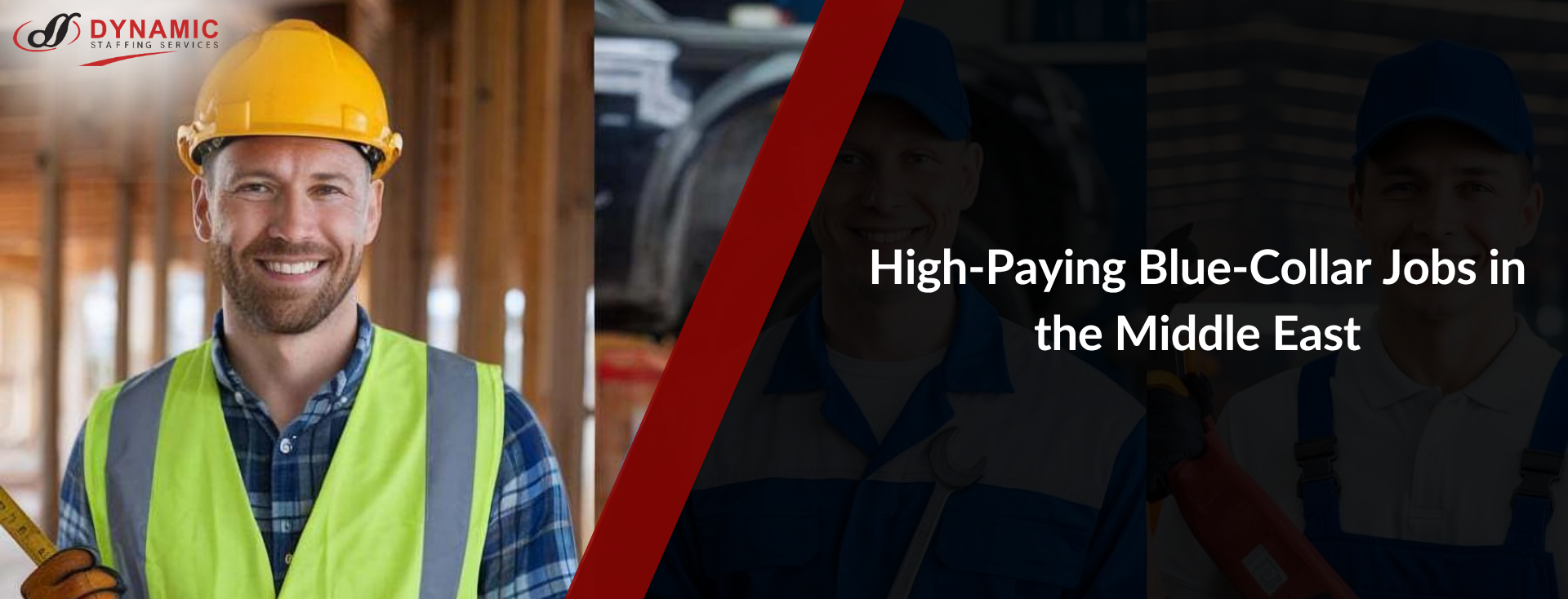
The Middle East remains a promising area for workers with blue-collar skills. Countries like Saudi Arabia, the UAE, Qatar, Oman, and Kuwait spend billions on construction, oil and gas, logistics, manufacturing, transportation, tourism, and infrastructure. These spheres are in need of qualified professionals who are capable of working safely, following directions, and performing technically.
The implication for applicants is simple: blue-collar professions are not limited to manual labour anymore. Qualified tradespersons are now able to get high salaries, rapid career advancement, and overseas employment.
Why Skilled Blue-Collar Workers Are in Demand
Due to the large scope of projects in the Gulf, employers need workers who are already familiar with the site, tools, equipment, safety regulations, and tasks. It is always better to hire employees who can begin their work immediately and require minimal training.
As per hiring trends in this field, the most lucrative blue-collar jobs in the Middle East will include work in welding, maintenance of oil and gas, crane work, and industrial electrical work by 2026. Moreover, having technical skills increases the chances of landing a job.
Top Job Roles for Candidates
People who have practical experience in this sphere have many options to choose from. Some of the professions in high demand include welders, electricians, plumbers, pipe fitters, riggers, crane operators, heavy equipment operators, HVAC technicians, diesel mechanics, machine operators, industrial electricians, scaffolders, steel fixers, fabricators, maintenance specialists, drivers, warehouse workers, and logistics personnel.
Oil and gas, construction, maintenance, logistics, and manufacturing normally provide better conditions for professionals since these sectors require a lot of labour for ongoing projects.
Skills That Can Increase Your Earning Potential
An applicant with very little experience can secure a job at the entry level. On the contrary, an applicant with vocational abilities, safety knowledge, a certificate and experience from the Gulf can become much more attractive to an employer. Traditionally, companies want these skills enhanced with an understanding of technical drawings and machine operation, equipment maintenance, welding standards, electrical safety, lifting procedures, and discipline at the location where the work is done.
If you are an inexperienced candidate or an unqualified employee, you should find one good trade. If you work in a trade, you will have to upgrade your skills using training or certification. You will be surprised to see how small changes can help you get a better job.
Documents Candidates Should Keep Ready
In order to get a job in the Middle East, you must have your documents prepared. The document set includes an updated CV, copies of your passport, educational certificates, experience letters, trade certificates, safety certificates, license copies, and passport-sized photos.
Your CV should contain information about your trade, total experience, Gulf experience, tools you can work with, project type, and your availability.
Apply Through a Trusted Recruitment Partner
As the need for Gulf jobs keeps rising, fake job offers are also on the rise. Candidates have to be especially careful about ambiguous salary promises, untrustworthy agents, and job vacancies without relevant details. An appropriate recruitment process consists of job matching, document verification, interviewer coordination, background checks of employers, and unambiguous advice.
Dynamic Staffing Services assists candidates in getting in touch with genuine overseas job openings in the Middle East. We help job seekers with proper recruiting support, document assistance, and position selection.
If you need blue-collar work in the Middle East, make your CV and apply through the proper channels.
You can send your updated CV to resume7@dss-hr.com. Dynamic Staffing Services is an organisation that assists skilled people in finding safe and successful job opportunities!