






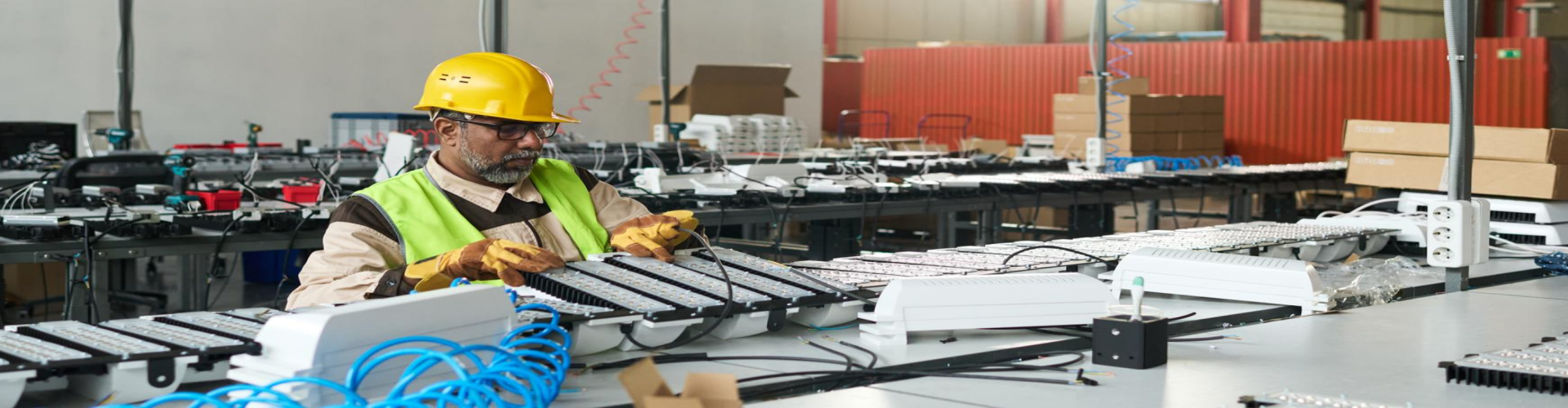
Slovakia is a manufacturing-oriented country that houses many automotive plants, parts manufacturers, engineering companies, logistics firms, and construction companies. Many manufacturing firms rely on assembly line personnel for day-to-day production.
However, requests for the production workforce may vary in a matter of days. A factory can have a huge order, open a new manufacturing shift, roll out a new product, or increase production capacity. In such cases, an employer may need 100, 200, or even 300 employees in no time.
This recruitment process is different from standard hiring. It must be carefully planned and executed in terms of gathering a huge pool of candidates, organising tests, providing the documentation, and deploying workers accordingly.
Professional staffing providers help employers conduct the process, preserving worker quality and not missing any deadlines.
Therefore, this article aims to explain how assembly line staffing works in Slovakia, what employers have to verify, and how Dynamic Staffing Services can help them.
What is Assembly Line Workforce Provision?
Putting substantial efforts into bringing, hiring, and putting workforces into positions required for manufacturing jobs is the essence of assembly line personnel supply.
It may involve permanent, temporary workers, freelance workers or any other kind of employment allowed in Slovakia. Employment type depends on the particular employer’s needs.
Assembly line staff recruitment requires
- A lot of identical job vacancies
- Agreed hiring and joining deadlines
- Similar job requirements
- Batch assessment interviews
- A lot of documentation
- One-time permits
- Staggered arrivals
For instance, an automotive components plant can require 200 production operators for a new production line, while another manufacturer may require machine operators, welders, assemblers, and quality inspectors for a big order.
In both cases, employers need more than just CVs They need to have a complete plan for workforce procurement.
Why It Is Important to Have a Detailed Recruitment Plan
Sometimes, bulk recruitment turns out to be very troublesome when there is no staff hiring plan in place.
Too many workers for one job and too few for another job can be hired. The manufacturing plant may be unable to provide enough space for employees, trainers, and mentors. Some selected people may refuse to work, as they are not satisfied with salaries, shifts, and job responsibilities.
Staffing plan should include:
- The total number of people hired
- Number of each job in particular
- Location of work
- Experience needed
- Machines to be used
- Shifts
- Wages and benefits
- Terms of contracts
- Accommodation and transportation are distributed for batches of hires.
- Employers should decide how many employees should be onboarded at once.
For instance, a company needs to hire 300 employees, with the hiring process divided into three batches of 100 employees to allow HR and operations teams to be equipped and trained properly for work.
Common Assembly Line Roles in Slovakia
The requirements for assembly line work depend on the kind of workshop and the type of goods being manufactured.
Common assembly line jobs include:
- Assembly line workers
- Production operators
- Machine operators
- Automotive part assemblers
- Cable assembly workers
- Packers
- Material handling specialists
- Warehouse workers
- Forklift drivers
- Pressers
- Quality controllers
- MIG and MAG welders
- Robot welders
- CNC operators
- Industrial electricians
- Maintenance employees
- Line leaders
- Production supervisors
Certain jobs require specialised skills and experience, and others may be good for workers with a little experience who can learn on the job.
Employers must not use one general job description for every position.
Machine operators, assembly workers, and quality controllers all have different responsibilities.
An employer needs to have clear information about the job to find the right person.
Why CV Screening Alone Is Not Enough
CVs provide useful information but may not always show how capable an applicant really is.
Job titles may have different meanings at different companies. A machine operator at one factory may only have loaded material in a machine, while in another factory, a similar position may involve setting up the machine and making measurements and reports about faults.
The supplier needs to clarify:
- What exactly have the candidates done in the position
- What type of factory have they worked in
- What machines have they operated
- What production targets have they met
- What shift patterns are they used to
- How have they worked with tools
- What quality and safety knowledge do they have
- What physical readiness do they have
- What communication skills do they have
For technical workers, practical testing is essential.
In the case of ordinary workers, it is possible to work with aptitude tests and structured interviews.
How Bulk Sourcing Works
To send a large number of people to work, the supplier has to attract more people to the company than are needed.
If the employer wants 200 people, the sourcing should not stop when 200 candidates have submitted their CVs
Some candidates may fail to pass the interview or the medical examination, or they may simply withdraw before work permits are issued.
A typical recruitment cycle would include:
- Gathering a large number of candidates
- Receiving applications
- Selecting candidates
- Testing the candidates
- Choosing candidates
- Completing medical checks and monitoring documents
- Getting permits and visas
- Bringing people to the workplace
This way, the employer can avoid problems with staff shortage.
It is important to have a reserve list of candidates, and these should also meet the requirements of the selected candidate.
Choosing the Right Sourcing Market
The sourcing country should be selected according to the employer’s actual needs.
Important factors include:
- Availability of workers
- Relevant industrial experience
- Technical skill level
- Salary expectations
- Interest in working in Slovakia
- Language ability
- Permit eligibility
- Document availability
- Medical fitness
- Expected deployment time
- Worker retention potential
The Indian Subcontinent offers a large pool of workers with experience in automotive plants, metal factories, engineering units, warehouses, electronics production, food processing, and other manufacturing sectors.
However, a large workforce is useful only when the candidates are screened correctly.
A manpower supplier should not promise large numbers without first checking candidate quality, documentation, and deployment feasibility.
Batch Interviews and Mass Testing
Bulk hiring must be fast, but it must also be controlled.
Candidates can be divided into batches based on job role, experience, and location. Each batch can move through registration, document verification, assessment, interview, and final selection.
For assembly line roles, testing may include:
- Tool recognition
- Hand and eye coordination
- Basic mechanical understanding
- Measurement ability
- Assembly speed
- Defect identification
- Safety awareness
- Following work instructions
- Ability to perform repetitive tasks
- Physical readiness for shift work
Technical positions need practical trade tests.
For example:
- Welders should perform welding tests.
- CNC operators should show machine and measurement knowledge.
- Electricians should complete industrial electrical assessments.
- Maintenance workers should identify faults and explain repair steps.
- Forklift operators should demonstrate safe operating ability.
Dynamic Staffing Services can arrange mass trade testing through its recruitment and assessment network. Large candidate groups can be screened under a standard process, which helps employers compare results fairly.
Client representatives can also attend the recruitment drive and assess candidates directly.
Maintaining Quality During Large-Scale Hiring
One of the main risks in bulk recruitment is lowering the selection standard to reach the required number.
This may help fill the list quickly, but it can create bigger problems after deployment.
Poor selection can lead to:
- Low productivity
- Higher rejection rates
- Quality issues
- Unsafe work practices
- Increased supervision
- Frequent absence
- Early resignations
- High replacement costs
The employer and supplier should agree on pass and fail standards before recruitment begins. The same criteria should be used for every candidate. Quality controls can include:
- Two-stage CV screening
- Identity verification
- Experience document checks
- Standard interview forms
- Practical assessments
- Employer approval
- Medical fitness checks
- Final document audit
- Reserve worker selection
For production jobs, attitude and discipline are also important. A technically suitable candidate may still struggle if they are not ready for repetitive work, rotating shifts, or strict factory rules.
Documentation and Permit Coordination
Large-scale recruitment creates a large amount of paperwork.
Each worker may need:
- A valid passport
- Employment contract
- Job offer
- Education or trade certificates
- Experience documents
- Police clearance
- Medical certificate
- Passport photographs
- Accommodation documents
- Employer declarations
- Work permit or residence documents
- Visa forms
- Certified translations
The exact requirements depend on the role, nationality, and employment route.
A good manpower supplier should manage documents in batches and maintain a clear tracking system.
The employer should be able to see:
- Which candidates are selected
- Which files are complete
- Which documents are pending
- Which applications have been submitted
- Which permits are approved
- Which workers are ready to travel
Poor document control can delay the entire workforce group.
Even one missing certificate or incorrect form can slow down processing for an individual candidate.
Deployment Logistics
The recruitment process does not finish after permit or visa approval.
Workers still need to travel, reach the workplace, move into accommodation, complete local formalities, and attend induction.
Deployment planning should cover:
- Flight bookings
- Group travel arrangements
- Airport assistance
- Baggage instructions
- Arrival transport
- Accommodation allocation
- Meal arrangements
- Local registration
- Medical checks where required
- Workplace reporting
- Emergency contacts
- Induction schedules
Large groups should normally travel in planned batches.
The employer should avoid bringing more workers than the plant can receive and train properly.
For example, if only two trainers are available, deploying 200 workers together may create confusion. Smaller groups may be more practical.
Pre-Departure Orientation
Workers should receive complete and correct information before travelling.
Pre-departure orientation may cover:
- Job duties
- Salary details
- Overtime rules
- Shift timings
- Workplace discipline
- Accommodation rules
- Transport arrangements
- Weather conditions
- Local laws
- Safety instructions
- Cultural expectations
- Contact persons
- Grievance procedures
This step helps reduce misunderstandings after arrival.
Workers should know what type of work they will perform, where they will live, what deductions may apply, and what behaviour the employer expects.
Basic Slovak language training can also be useful. Workers may learn common workplace instructions, numbers, safety terms, warning signs, and production words.
Reducing No-Shows and Worker Turnover
Candidate withdrawals and worker turnover are major concerns in international bulk recruitment.
A worker may leave the process because of a long delay, unclear information, a better job offer, or a change in family circumstances.
The risk can be reduced through:
- Clear job information
- Regular candidate communication
- Realistic salary explanations
- Fast document collection
- Reserve candidate planning
- Commitment checks
- Pre-departure orientation
- Timely travel arrangements
After deployment, employers can improve retention by providing:
- Suitable accommodation
- Reliable transport
- Timely salary payments
- Respectful supervisors
- Clear work instructions
- Language support
- Fair overtime allocation
- Early help with workplace problems
The first 30 to 90 days are important. Employers should monitor attendance, performance, worker concerns, and accommodation issues during this period.
Why Employers Prefer One Manpower Partner
Some employers use several small agencies for one large workforce requirement.
This may create more applications, but it can also create:
- Duplicate candidates
- Different screening standards
- Unclear responsibilities
- Inconsistent job information
- Document mistakes
- Poor reporting
- Delayed deployment
- Difficulty managing replacements
A single accountable manpower partner can provide one system for the complete project.
This includes:
- One workforce plan
- One selection standard
- One candidate database
- One reporting format
- Central document control
- Coordinated travel
- Clear responsibility
- Better communication
The manpower supplier may still recruit from different cities and regions, but the process remains controlled under one project team.
What to Ask a Manpower Supplier Before Signing
Before selecting a manpower company, Slovak employers should ask clear questions.
How many workers can you realistically mobilise?
The supplier should explain the expected database size, screening ratio, and recruitment period.
How will candidates be assessed?
Ask whether the supplier provides interviews, aptitude tests, practical tests, document checks, and employer-led selection.
Where will recruitment take place?
The employer should know which countries, cities, and assessment centres will be used.
How will quality be maintained?
The supplier should explain the pass criteria, testing standards, and document verification.
Will reserve candidates be provided?
Backup candidates are important for high-volume hiring.
Who will manage permits and documents?
Responsibilities should be clearly divided between the employer, supplier, immigration adviser, and worker.
How will progress be reported?
The employer should receive regular and easy-to-understand recruitment reports.
What happens when a candidate withdraws?
The supplier should have a replacement process.
What support is provided before travel?
Ask about medical checks, worker orientation, contract explanation, and travel preparation.
What happens after deployment?
Post-arrival follow-up is important for attendance, retention, and early problem-solving.
How DSS Supports Assembly Line Manpower Supply in Slovakia
Dynamic Staffing Services supports automotive, manufacturing, logistics, engineering, and industrial employers with international manpower recruitment.
Our support can include:
- Workforce planning
- Job description review
- Sourcing market selection
- Large-scale candidate mobilisation
- CV and document screening
- Batch interviews
- Mass trade testing
- Client delegation support
- Medical coordination
- Permit and visa documentation support
- Travel and group deployment planning
- Pre-departure orientation
- Arrival coordination
- Post-deployment follow-up
DSS can manage both skilled and semi-skilled workforce requirements under one recruitment plan.
We support employers that need workers for new production lines, plant expansion, shift increases, large orders, seasonal peaks, and worker replacement.
Employers can also explore our Blue-Collar Recruitment Services and Manufacturing Recruitment Solutions for wider workforce requirements.
Build Your Assembly Line Workforce With Better Control
Assembly line manpower supply is not only about finding a large number of candidates.
The employer needs the right workers, in the right numbers, at the right time.
This requires clear planning, strong candidate mobilisation, standard screening, practical testing, accurate documentation, and phased deployment.
A reliable manpower partner should help the employer balance three important needs: speed, volume, and quality.
When all stages are managed under one system, Slovak employers can reduce hiring risk, meet production targets, and build a more stable workforce.
Planning a large-scale hiring drive for your Slovakia assembly line? Contact Dynamic Staffing Services at clientservices@dss-hr.com to request a manpower supply proposal.
