






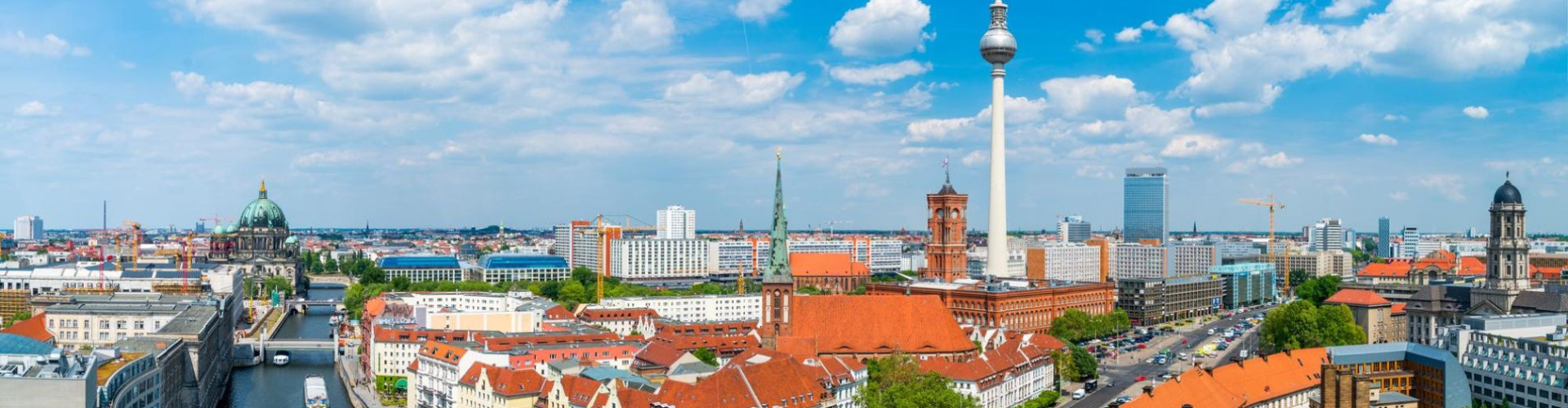
As one of the largest manufacturers in the world, Germany is a leader in many manufacturing sectors, such as large-scale vehicle manufacturers, automotive companies, and precision engineering based in the Baden-Württemberg area.
The role of industrial engineers is to serve as the foundation of Germany's Industrial base by providing solutions for streamlining processes, increasing productivity, and providing quality products throughout the many changes coming from Industry 4.0, therefore, a clear grasp of minimum salary benchmarks is vital for German employers, both small to mid-sized (SMEs) and large global manufacturers to ensure they hire top talent while budgeting and forecasting salaries in a highly competitive labor market.
Dynamic Staffing Services, founded 48 years ago by Major S.P. Khosla, partners with German manufacturers to place top industrial engineers. From 1977 to 2007, we placed over 200,000 professionals across the globe, including Europe.
This article will use data from the salary surveys and placement records from Dynamic Staffing Services to provide a realistic representation of what the average salary for different roles is, what to expect from various roles, and what to consider strategically when hiring.
Average Salary Benchmarks for Industrial Engineers
An entry-level industrial engineer is likely to receive an annual gross salary in Germany of at least €1,500 to €2000 per month, depending on region and deductions (2025 rates). This is applicable for a person with a bachelor's/master's degree in Industrial Engineering, a junior process engineer who works to support lean initiatives, an immigrant coming in under the skilled immigration act, and will be eligible for EU Blue Cards as of 2025, and any operational role, such as production planner, quality assurance, or supply chain support.
The southern states, such as Bavaria, have a salary premium of 10-15% due to the higher cost of living in that area. At the same time, the Eastern German region provides very competitive compensation packages along with assistance for relocation. The minimum salary aligns with the Minimum Wage Act, while continuing to attract and retain enthusiastic individuals wanting to progress in their careers.
Dynamic Staffing Services' rigorous screening process, which includes checking a candidate's understanding of the basics of Six Sigma and proficiency in the German language, has confirmed that all applicants meet this salary requirement.
The Role of the Industrial Engineer in German Industry
Industrial Engineers form a bridge between engineering, operations, and management in creating, designing, implementing, and maintaining the highest level of efficiency in utilizing complex systems within large organizations. With a manufacturing sector worth €1.5 trillion in Germany, industrial engineers contribute to overcoming some of the most severe challenges faced by manufacturers in Germany.
The Key Contributions Of The Industrial Engineer Include The Following:
- Workflow optimization - Redesigning assembly line processes, which resulted in a reduction of cycle times between 20 and 30%.
- Waste reduction - By utilizing the Kaizen method at chemical plants, lower scrap rates can be achieved through FIFO inventory management practices.
- Enhancements to Layout and Flow - Utilizing tools such as AutoCAD/SIMUL8 to redesign factory layouts and improve throughput in logistics.
- Assurance of Quality - Implementing ISO 9001 Quality Management Systems by establishing the use of Statistical Process Control (SPC) within Bosch to produce defect-free products at a level of 99% by controlling variations throughout production processes.
- Lean Manufacturing - By facilitating 5S events and value stream mapping events.
- Supply Chain Coordination - Forecasting using SAP ERP in order to provide a means to avoid disruptions in the Airbus supply chain.
- Cost-neutral Output Growth – Balancing the headcount with robotic automation represents a significant opportunity for Small and Medium-sized Enterprises (SMEs) against the challenges of a restricted labor supply in many sectors and industries.
An entry-level engineer generates a positive return on investment (ROI) within a short timeframe, frequently recovering wage costs through developing at 10% to 15% efficiency gains within the first quarter of employment.
Dynamic Staffing Services trains its placements on the German-specific tools, for example, DIN standards and the occupational safety and health act, enabling our hired candidates to add value more quickly.
Strategic Advantages of Average Salary Hiring
German companies are embracing tiered compensation to drive scalability:
- Cost Efficiency: Organizations can bring on multiple employees simultaneously without incurring large budgetary impacts, especially beneficial when planning for multiple locations.
- Performance Validation: The company's three to six-month probationary period allows for both the company and employee to assess how well the employee fits into the company's operation prior to receiving a bonus (20%-30%) for their continued performance.
- Training Investment: Businesses often reimburse employees for International English Online Master (IEOM) and/or German Courses, with typical value ranges.
- Shareholder Equity Maintenance: Using this form of compensation aligns with the various collective agreements within the various sectors that are affiliated with IG Metall.
- Team Scaling: Companies can increase the size of their teams during seasonal demands, e.g., the ramp-up of Q4 for the automotive industry, through bulk hiring.
In high-volume environments, junior-level employees complete approximately 80% of the operational work, while International hires typically outperform junior hires.
Average Salary for International Hires
Since there is currently a shortage of qualified engineers in Germany, many international engineers (not from the EU) are being recruited under the EU Blue Card, with good salary packages being offered.
- Training had been based on a rigorous STEM education by Institutions.
- They have experience working on high-volume operations in emerging markets.
- They have experience working within the punctuality, process-driven culture of Germany.
- They are loyal employees and view their jobs as a gateway to permanent residency (21-33 months).
Dynamic Staffing Services provides streamlining services for employers, with retention rates of 90% vs 15% as per the current industry average. So if you want to know more about our services, contact us today at clientservices@dss-hr.com.
Client Testimonials
Cost-Effective Use of Entry-Level Engineers at Low-wage Salaries – Operations Manager of an Automotive Supplier in Stuttgart — Markus Lehmann, 2025
"We needed 20 new industrial engineers to launch our EV lines without increasing the payroll costs. Dynamic Staffing Services helped us with candidates who could work properly; all were university graduates from accredited institutions and had completed basic Six Sigma training. These engineers began working on process mapping on day 1, and in just three months, we were able to increase our efficiency by 25% in set-up times. Dynamic Staffing Services was able to process visas for five international candidates in four weeks flat. The average performance rating from our employees is 4.7 out of 5; we have promoted four already. This model works for any growth-related phase of our operation."
Cost-Effective Support for Multi-Site Operations – Plant Director of an Electronics Manufacturer in Munich — Sabine Fischer, 2025
"We had to quickly fill process engineering positions for quality audits at all three plants. Dynamic Staffing Services was able to fill this need with 15 process engineers who have had experience in iso protocols. The implementation of waste metrics has increased 18%, with an easy pass for all audits. Each new engineer received the required SAP and cultural training during the onboarding process; therefore, they had no onboarding delays. The international hires adapted easily to our company culture, as they provided new, innovative just-in-time ideas from Asia. Our budget was maintained, and we realized a 22% increase in output. We are already utilizing dynamic for our expansion."
High-Impact Patterns of International Hires – Manufacturing Manager of a Logistics Center in Hamburg — Lars Petersen
"Supply chain disruptions resulting from post-2024 impacts required us to hire 12 salaried engineers rapidly. Dynamic Staffing Services provided us with international employees with expertise in ERP forecasting. Therefore, these engineers were immediately able to optimize delivery routes to create a 15% reduction in fuel consumption. Basic German fluency ensured seamless team integration, and cultural modules allowed them to manage shift transfers effectively. All employees exceeded our expectations, and we experienced zero turnover. This is a key advantage for supporting our ambitions of building a logistics center in Hamburg."
Client FAQs
1. Entry-level salaries for engineering graduates working in Germany?
On average, the starting salaries for young/newer engineering graduates working in Germany typically begin between €1200-€1500 per month.
2. Do young/entry-level engineering graduates have a good opportunity to advance their salaries?
Yes! Usually, as young/entry-level engineers gain experience, take on more responsibility, and perform well, their salaries will increase over time.
3. Do average salary employees produce products or services that are of lower quality?
No, not with the proper screening. Many young/entry-level engineers demonstrate their productivity within their first year, even though they started at the minimum salary level.
4. How does Dynamic Staffing Services help employers with average salary hiring?
Dynamic Staffing Services helps employers to provide job-ready industrial engineers, assists with required documentation, and promotes employer stability over the long-term, making the hiring of industrial engineers at the average salary successful and sustainable.
