






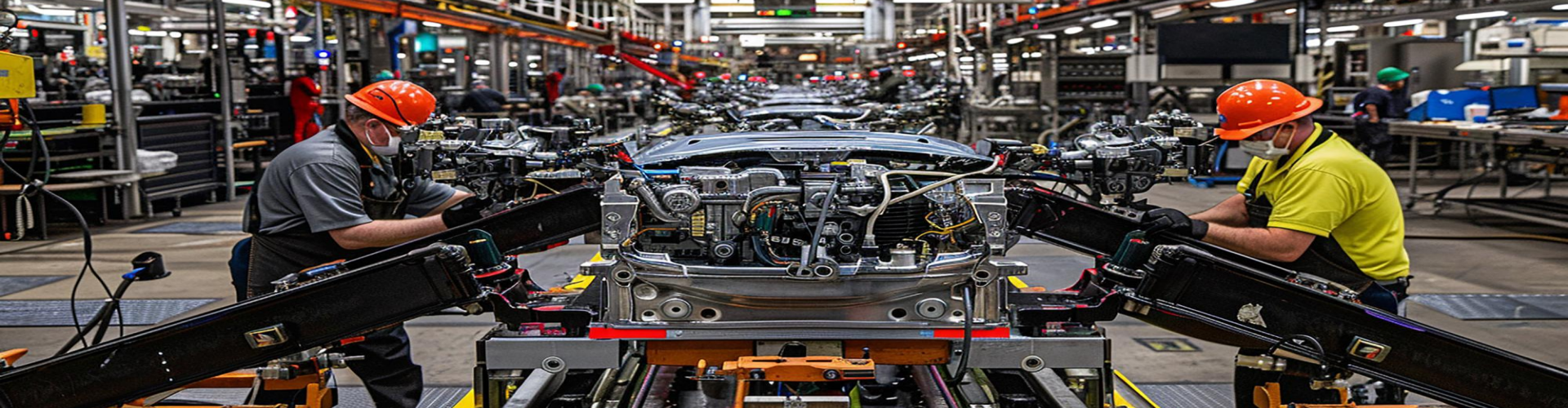
in the production of vehicles, manufacturing of components, engineering, logistics, warehousing and supplying industries all need to have a stable workforce. If there are unfilled vacancies, it will interfere with production volume, planning of shifts, quality of the products, maintenance, and delivery of goods to customers.
A qualified automotive employment agency in Slovakia can help employers regulate their recruitment process. They will assist in finding candidates, screening, testing, completing all necessary documentation, and integrating the recruited workers into the company. This will open wider opportunities for employers and alleviate the burden on their HR departments.
Recruitment in the auto industry implies different services. For one company, it may be required to have permanent engineering staff, while another might need 200 people to be hired to launch the production line. Some companies may require temporary staff to cope with seasonal production peaks, while others may need already qualified personnel to recruit.
The correct service depends on the number of workers, job categories, hiring deadline, employment model, and long-term workforce plan. This guide explains what an automotive employment agency does and how Dynamic Staffing Services supports employers across Slovakia.
What Does an Automotive Employment Agency Do?
Therefore, an auto employment agency is a company that helps other companies with recruitment for different positions in the auto industry. Recruiting may begin with workforce planning and will end when a person arrives at the company and passes the initial stage of adaptation.
Among the main functions of the agency are:
- Workforce review
- Job description writing
- Finding the right sourcing place
- Promoting a job opening
- Searching for candidates
- Screening candidates and checking their experience
- Checking their basic documents
- Holding an interview
- Conducting practical testing
- Coordinating employment documents
- Helping obtain a visa and permits
- Planning travel and other issues
All services will differ based on the employer’s needs. Some companies may require a candidate search only, while others may want to take care of medical check-ups and ticket booking.
A good agency should start with understanding the production process of the company.
Permanent Recruitment for Automotive Employers
Permanent staffing is usually the best choice if the employer wants to find an employee for several years.
The employer may be searching for:
- CNC operators/setters
- Industrial electricians
- Machinery maintenance technicians
- Mechatronics technicians
- Tool and die makers
- Quality control inspectors
- Automotive repair technicians
- Engineers
- Warehouse managers
- Production supervisors
- Shift managers
At the start, the agency must determine what particular skills of the candidate and what experience and requirements of the job must be taken into consideration.
After that, the recruitment agency must find the needed number of candidates fitting these requirements.
In technical positions, evaluation may be needed because CVs do not always present the real experience of the applicant for the CNC operator position and whether the candidate has only limited experience or wide experience in regulating, measuring, and controlling the manufactured goods.
While recruiting, it is very important to assess the possibilities for the candidate to work long-term. The evaluation needs to consider different points, such as the applicant’s communication and personal skills, salary, readiness for a shift job, and willingness to move to another place of work.
Temporary Staffing and Short-Term Workforce Needs
The automotive market is volatile and depends on the seasons, demands of clients, absences of employees, and urgent delivery terms.
Temporary staffing is a good method in modern business practice, assuming compliance with Slovak employment law.
Temporary staffing can be used in the following cases:
- The number of assembly workers increases
- There is a seasonal demand
- Problems with packing
- Storage
- Employee absence
- Urgent orders
- A company during servicing
At the start of the recruitment process, the employer and agency shall discuss details of the recruitment process, i.e., who will act as the employer, who will pay salaries, who will be responsible for managing personnel, where the staff will live, and how issues at workplaces will be solved.
If temporary staffing is impossible, then the agency can offer fixed-term recruitment.
Bulk Manpower Recruitment
Bulk recruitment is required when an employer needs a large workforce within a fixed period.
For example, a company may need:
- 150 assembly workers
- 50 machine operators
- 40 warehouse employees
- 25 welders
- 15 quality inspectors
- 10 maintenance technicians
This type of project cannot be managed through one-by-one recruitment. It requires a complete plan covering candidate mobilisation, assessment, documents, permits, travel, and phased deployment.
The process may include:
- Confirming job categories and numbers
- Selecting sourcing locations
- Mobilising a large candidate database
- Screening applications
- Conducting practical tests
- Arranging employer interviews
- Selecting final and reserve candidates
- Completing medical and document checks
- Coordinating permit and visa files
- Deploying workers in planned groups
Backup candidates are important because some applicants may withdraw, fail medical checks, submit incomplete documents, or become unavailable during processing.
A reliable agency should explain how many people must be mobilised and tested to achieve the final target.
Recruitment Process Outsourcing
Recruitment Process Outsourcing (RPO) can be an ideal situation when an employer wants a third-party partner to take over most parts of the recruitment process.
An agency can perform the following functions:
- Human Resource Planning
- Job planning
- Job advertising
- Shared candidate pipeline management
- Candidate sourcing
- Screening of the candidate
- Interview planning
- Candidate testing
- Candidate tracking
- Candidate recruitment reports
- Candidate placement
RPO will be especially beneficial to the automotive industry due to its regular recruitment across many functions and plants.
It also allows internal HR staff to focus on employee relations, training, payroll, retention, and day-to-day operations of the workforce.
The ultimate authority in recruitment remains within the employer’s organisation, while the agency provides the process of recruitment, pipeline of candidates, the team for the project, and the reporting structure.
Roles Covered Across the Automotive Sector
An automotive recruiting firm should aim to fill positions in various sectors of the value chain.
Manufacturing and Assembly
Sample posts include operator and foreman jobs, machine operators, hydraulic and mechanical press operators, assemblers, wiring specialists, and wrapping personnel.
Candidates should possess adequate experience for repetitive jobs where work is target-driven.
Quality Assurance
Among quality people are visual inspectors, measurement technicians, final inspection workers, and leaders of departments.
Candidates should know how to operate measuring instruments, find defects, and observe tolerance specifications.
Engineering and Maintenance
Positions include mechanical technology experts, electrical engineers, mechatronic engineers, automation technicians, PLC technical specialists, and maintenance technicians.
They require rigorous engineering selection.
Metalworking and Welding
Among professionals working in welding jobs are MIG, MAG, TIG, and robotic welders and welding specialists.
In addition, the candidates should pass testing in their trade.
Logistics and Warehousing
Some common job vacancies are forklift operators, warehouse staff, logistics handlers, inventory support workers, and workers in dispatch services.
Those workers facilitate the transport of materials, components, and finished products.
Candidate Sourcing and Screening
A strong automotive employment agency in Slovakia should use a structured screening process.
The first review may cover:
- Employment history
- Automotive or manufacturing experience
- Actual job duties
- Machine and tool knowledge
- Qualifications
- Shift-work experience
- Communication skills
- Passport validity
- Salary expectations
- Relocation readiness
The agency should not depend only on job titles. Two candidates may both call themselves machine operators, but their responsibilities may be completely different.
A detailed interview should confirm what the person actually did, what equipment was used, and how independently the candidate worked.
Employers should receive more than a CV. A useful candidate profile may include an interview summary, technical assessment, document status, experience details, and recruiter recommendation.
Practical Testing and Trade-Test Facilities
Technical workers should be tested according to the actual job.
Assessments may include:
- Tool recognition
- Mechanical understanding
- Assembly tasks
- Drawing interpretation
- Measurement exercises
- Machine operation
- Welding tests
- Electrical assessments
- Fault identification
- Defect checking
- Forklift operation
- Safety awareness
Dynamic Staffing Services has access to more than 10 trade-test centres. These facilities can support structured assessments for skilled and semi-skilled workers.
The employer can define test criteria before recruitment begins. Client representatives may attend the assessment, interview candidates directly, or observe testing remotely.
Practical testing helps employers make decisions based on demonstrated ability rather than only CV claims.
Compliance and Documentation Support
International recruitment involves employment documents, immigration procedures, medical checks, and travel preparation.
Candidate files may include:
- Passport
- Employment contract
- Job offer
- Education certificates
- Trade certificates
- Experience records
- Police clearance
- Medical reports
- Accommodation documents
- Employer declarations
- Permit forms
- Visa forms
- Certified translations
The employer, agency, worker, and immigration adviser should clearly understand who is responsible for each document.
A professional agency should maintain a tracker showing candidate selection, pending documents, medical status, application progress, permit status, visa status, and travel readiness.
No agency should guarantee permit or visa approval. The relevant authorities make final decisions. The agency’s role is to support accurate preparation, coordination, and communication.
Technology and Recruitment Infrastructure
Technology helps employers manage large recruitment projects more clearly.
Digital systems may track:
- Candidate applications
- Interview results
- Trade-test scores
- Document status
- Medical updates
- Permit progress
- Travel plans
- Deployment dates
This gives employers better visibility and reduces the risk of missing files or delayed action.
However, technology cannot replace experienced recruiters and technical assessors. A database can organise information, but human judgement is still needed to confirm whether a candidate suits the job.
Global Sourcing for Slovakia
International sourcing may be required when local hiring cannot provide enough workers or specialist skills.
Dynamic Staffing Services has worked in international recruitment since 1977. It operates through 24 offices across 16 countries and supports recruitment for automotive, manufacturing, engineering, logistics, construction, and other workforce-intensive sectors.
Its network can help employers access candidates with experience in machine operation, assembly, metal production, maintenance, warehousing, welding, electronics, and industrial logistics.
The sourcing country should be chosen carefully. Employers must consider candidate availability, technical experience, document readiness, language ability, salary expectations, relocation interest, and likely retention.
How the Recruitment Process Begins
The engagement normally starts with a detailed consultation.
The employer shares information about:
- Job titles
- Number of workers
- Plant location
- Required experience
- Equipment and machines
- Shift patterns
- Salary and benefits
- Contract type
- Accommodation
- Transport
- Joining deadline
- Deployment stages
The agency then prepares a recruitment plan covering sourcing markets, candidate targets, screening standards, testing methods, documentation responsibilities, reporting, and expected deployment stages.
Once the plan is approved, sourcing and selection can begin.
How DSS Supports Automotive Employers
Dynamic Staffing Services helps firms within the auto sector hire employees, including manufacturers, suppliers, logistics firms, engineering firms, and other companies.
For this purpose, the following services can be offered:
- Industry workforce planning
- Reviewing Job Descriptions
- Searching for international candidates
- Mobilising candidates in bulk
- Screening CVs and work experience
- Proof verification
- Testing
- Interviews with clients
- Medical clearance
- Recruitment documents development
- Pre-departure preparation
- Travel arrangements
- Deployment of new hires
- Post-deployment communication
DSS can accommodate project work as well as ongoing staffing needs in the industry. Different recruitment methods can be used depending on the job titles, volume of hiring, lead time, and the source of staff.
Choosing an Automotive Employment Agency in Slovakia
The right agency should do more than forward CVs It should understand production operations, identify suitable sourcing markets, assess candidates properly, manage documents, and provide clear reporting.
Employers should review industry experience, international reach, testing capacity, compliance support, bulk hiring ability, worker preparation, and post-deployment communication.
For companies looking for an experienced automotive employment agency in Slovakia, Dynamic Staffing Services offers permanent recruitment, bulk manpower hiring, skilled trade recruitment, blue-collar sourcing, RPO support, and deployment coordination.
A well-managed recruitment process can help automotive employers reduce hiring pressure, improve candidate quality, and build a more stable workforce.
Explore DSS’s full range of automotive staffing services for Slovakia. Contact clientservices@dss-hr.com to discuss your workforce requirements.
